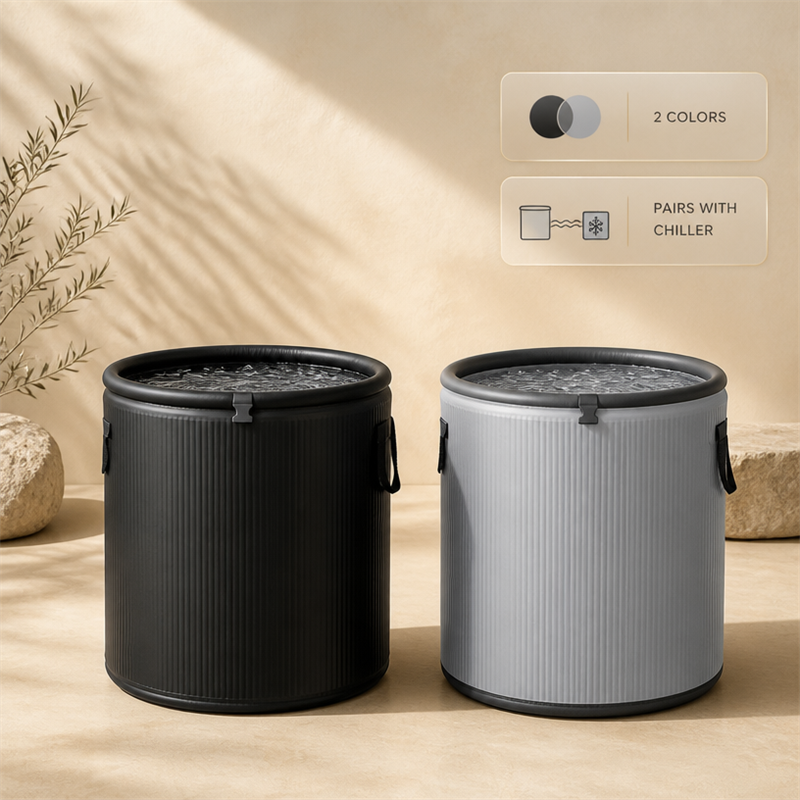
Selecting the right cold plunge tub goes far beyond initial purchase considerations. Many facility managers and wellness center operators discover too late that poor product selection creates persistent maintenance challenges, operational inefficiencies, and unexpected costs. The truth is that thoughtful product selection during the buying process directly determines how much time, effort, and money you'll spend maintaining your equipment over its lifetime. Understanding this relationship between initial selection and long-term maintenance burden is essential for anyone responsible for cold water immersion facilities, whether in commercial spas, athletic training centers, or corporate wellness programs.
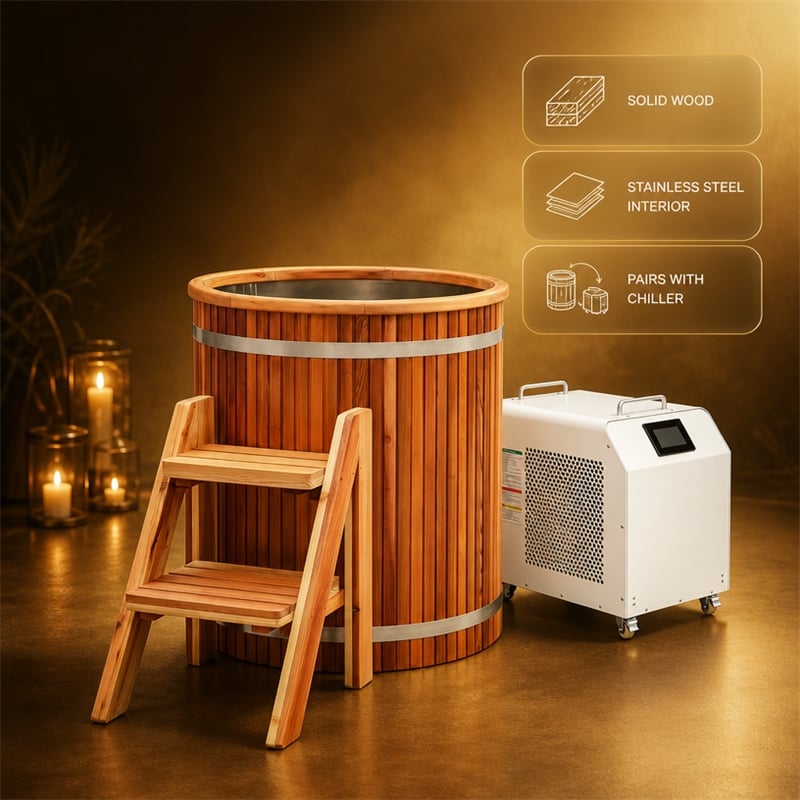
The foundation of reducing maintenance issues lies in making an informed product selection upfront. When you choose a cold plunge tub designed with durability, accessibility, and quality materials in mind, you eliminate countless problems before they start. This article explores how maintenance-conscious product selection strategies work, what to evaluate during the buying process, and how commercial use scenarios demand different considerations than residential installations. By the end, you'll understand exactly how to identify and select equipment that minimizes ongoing maintenance burden.
Understanding Maintenance Risk in Cold Plunge Tub Selection
How Material Quality Impacts Long-Term Maintenance
The materials used in your cold plunge tub fundamentally determine maintenance requirements throughout its operational life. Inferior construction materials corrode quickly, develop leaks, crack under thermal stress, and create breeding grounds for algae and bacterial contamination. Premium materials like stainless steel liners and food-grade acrylic resist corrosion, maintain structural integrity under temperature cycling, and remain easy to clean and sanitize. When evaluating product selection options, examining material specifications isn't just about initial durability—it's directly about reducing the maintenance work that will consume your time and budget for years to come.
Common Maintenance Failures From Poor Selection
Facilities that skipped thorough product selection often face recurring maintenance nightmares. Wooden barrels without proper sealant develop rot and require constant structural repairs. Thin liners puncture easily, forcing emergency drainage and costly replacements. Poor drainage systems trap stagnant water, requiring frequent deep cleaning and increasing disease transmission risk. Inadequate insulation leads to constant temperature fluctuation, stressing components and consuming excessive energy. These aren't inevitable problems—they're direct consequences of inadequate product selection decisions made months or years earlier. Commercial use environments especially amplify these issues, as higher usage frequency accelerates wear and makes maintenance accessibility critical.
Critical Evaluation Factors for Maintenance-Focused Product Selection
Material Durability and Construction Standards
Begin your product selection process by demanding complete transparency about materials and construction methods. Stainless steel liners rated 304 or higher provide superior corrosion resistance compared to lower grades. Cedar or premium wood construction should include verified sealant specifications and documented durability testing. Ask manufacturers for maintenance documentation that shows how their specific cold plunge tub design minimizes common failure points. For commercial use applications, verify that materials have been tested under high-frequency usage conditions and that manufacturers provide clear maintenance intervals and procedures. This level of scrutiny during product selection directly correlates to reduced maintenance burden later.
Drainage, Circulation, and Water System Design
The water management system within your cold plunge tub deserves intense scrutiny during product selection. Efficient drainage prevents water stagnation, which is the root cause of biological contamination and odor issues requiring constant maintenance attention. Circulation systems should include reliable filtration, skimming, and turnover rates appropriate for your commercial use volume. Poor circulation design forces manual cleaning and chemical intervention far more frequently than well-engineered systems. During product selection evaluation, request specifics on turnover rates, drain configurations, and how the system handles peak usage periods. Verify that replacement filter cartridges and circulation components are readily available and reasonably priced, as these maintenance items will recur regularly. Temperature control precision also matters—maintaining stable water temperature reduces stress on components and extends equipment lifespan significantly.
Accessibility and Component Replacement Design
Maintenance becomes exponentially more difficult when your cold plunge tub design makes components hard to reach or replace. During product selection, examine how easily technicians can access filters, pumps, drains, and heating elements without dismantling the entire system. Modular designs with standardized connections reduce both repair time and cost compared to integrated systems where one component failure requires extensive disassembly. For commercial use environments where uptime directly affects revenue, accessibility design is not a luxury feature—it's a maintenance necessity. Ask manufacturers for video documentation showing component replacement procedures, and verify that replacement parts inventory is maintained by reliable suppliers. Your product selection should explicitly prioritize accessibility as a maintenance risk factor equal to material quality.
Maintenance Strategies Enabled by Smart Product Selection
Preventive Maintenance Planning for Commercial Use
Once you've made an intelligent product selection, you can implement maintenance strategies that prevent problems rather than constantly reacting to crises. Facilities with well-designed cold plunge tub systems can establish predictable maintenance schedules based on documented turnover rates, filter life expectations, and seasonal usage patterns. For commercial use operations, preventive maintenance becomes economically viable because the equipment reliability justifies the investment. Your product selection should specifically enable this proactive approach—if you've chosen a system with documented maintenance requirements and readily available parts, you can staff appropriately and budget accurately. Systems selected poorly create unpredictable failures that force expensive emergency repairs and create operational disruptions that damage customer satisfaction.
Scaling Maintenance Across Multiple Locations
Organizations with multiple facilities face exponential maintenance complexity unless they make consistent product selection decisions across all locations. When you standardize on a specific cold plunge tub model and manufacturer during the product selection phase, your maintenance technicians can transfer between facilities with existing expertise and experience. Spare parts inventory becomes more efficient when all equipment uses identical components. Training programs become more effective when all staff interact with identical systems. For commercial use organizations operating multiple wellness centers or athletic facilities, this consistency during product selection creates massive operational leverage in maintenance management. Conversely, facilities that made inconsistent product selection choices struggle with fragmented expertise, duplicate inventory, and training complexity that increases maintenance costs substantially.
FAQ
What material choice provides the best maintenance profile for a cold plunge tub in commercial use?
Stainless steel liners combined with premium wood barrels or composite outer structures deliver optimal maintenance characteristics for commercial use applications. Stainless steel resists corrosion, withstands frequent temperature cycling, and remains easy to sanitize between users. Premium cedar wood offers aesthetic appeal while maintaining structural integrity when properly sealed. This combination during product selection minimizes material degradation, reduces leak risk, and simplifies cleaning protocols required for high-traffic commercial facilities.
How does product selection affect the frequency of filter replacement and water treatment maintenance?
Cold plunge tub systems with superior circulation design and larger filter cartridges require replacement far less frequently than poorly designed alternatives. During product selection, comparing turnover rates and filter specifications directly predicts maintenance labor and chemical costs. A system selected for commercial use that achieves four complete water turnovers daily will maintain cleaner water and require less frequent filter changes than a system achieving only one or two turnovers. This maintenance frequency difference directly impacts operational expenses and staff allocation across your facility.
Should I prioritize initial cost or maintenance accessibility during cold plunge tub product selection?
For any commercial use scenario, prioritizing maintenance accessibility during product selection consistently delivers better economics than choosing the lowest initial purchase price. A cold plunge tub that costs 20 percent more upfront but reduces maintenance labor by 50 percent pays for itself within months while improving uptime and user experience. Facility managers responsible for commercial use operations should always request total cost of ownership analysis from manufacturers, comparing initial purchase price against documented maintenance requirements, component availability, and typical repair costs over five to ten years.
 EN