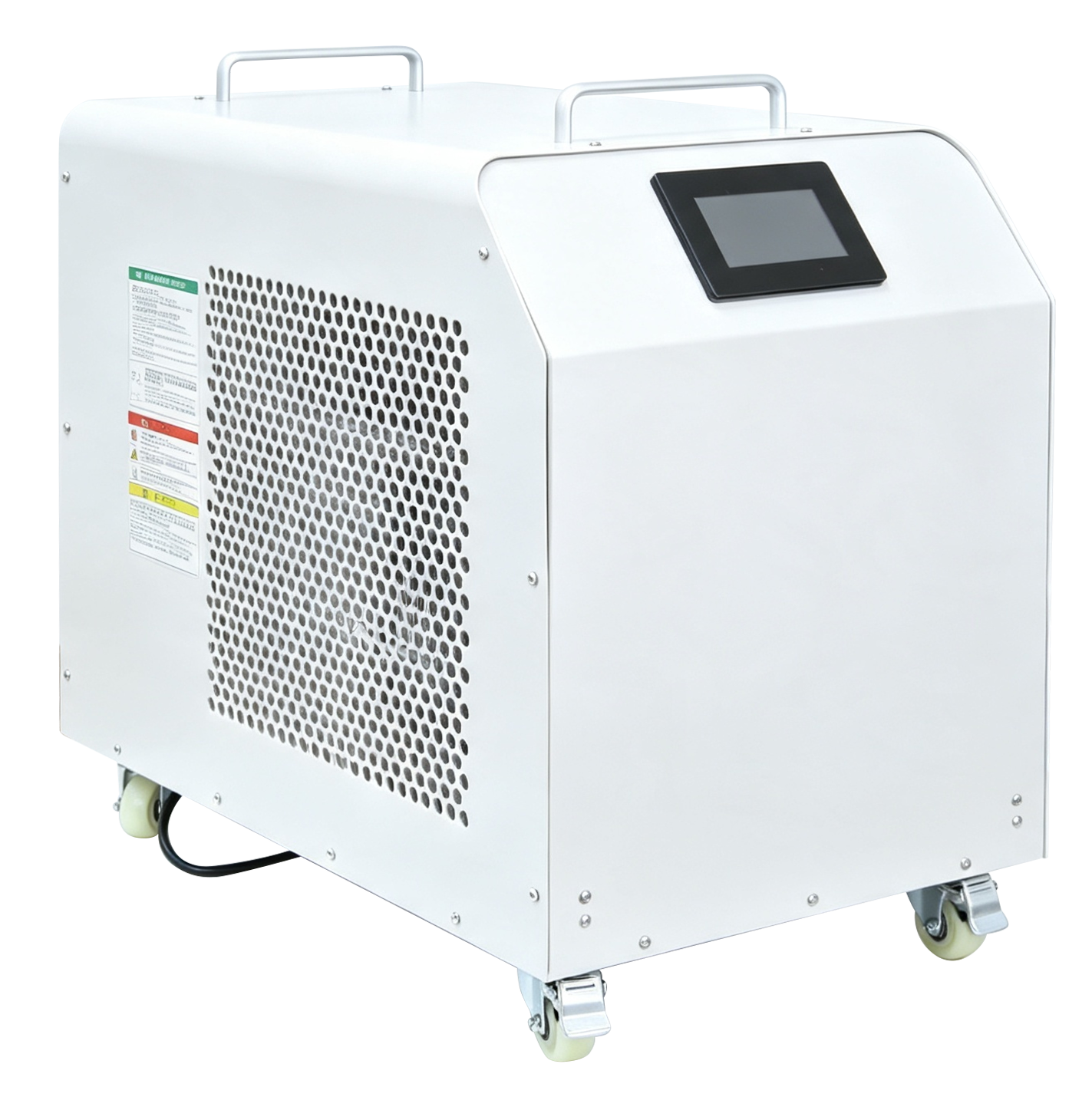
Selecting the right ice bath chiller requires careful alignment between equipment capacity and actual user demand patterns. Many facility managers make the critical mistake of choosing a chiller based solely on space availability or upfront cost, ignoring how demand will evolve over time. This misalignment leads to undersized systems that cannot meet peak usage periods, or oversized units that waste energy and capital. The foundation of smart chiller selection begins with honest capacity planning that accounts for current usage, seasonal variations, and growth projections specific to your facility type and user base.

Whether you operate a high-performance sports facility, luxury wellness center, or recovery clinic, understanding the relationship between ice bath chiller capacity and your specific user demand is essential for operational success. The process involves analyzing how many users will access the facility simultaneously, how frequently they use ice immersion therapy, and what temperature stability they require. Proper capacity planning ensures you invest wisely, avoid service interruptions, and maintain consistent experience quality that keeps clients returning and referring others to your facility.
Understanding Capacity Planning for Ice Bath Chillers
Defining Your User Demand Profile
User demand goes beyond simple headcount. It encompasses peak concurrent usage, session duration, frequency patterns, and temperature precision requirements. For commercial use environments, you need to identify your busiest hours—typically early morning before work or evening after training sessions. If you operate a sports facility, demand may spike after team practices or weekend competitions. A wellness center might see steady mid-day traffic with weekend surges. The ice bath chiller must handle your peak demand without temperature drift or long recovery times between sessions.
Start by tracking actual usage data if you already operate ice baths, or survey comparable facilities in your market segment. Record how many people use the facility per hour during peak periods, average session length, and temperature targets. This data forms the foundation for capacity planning decisions that directly impact your return on investment and customer satisfaction scores.
Translating Demand into Cooling Capacity
Cooling capacity is measured in BTU per hour or kilowatt output. Every user session removes thermal energy from your bath water, and your ice bath chiller must replenish that energy quickly enough to maintain target temperature. A 50-gallon bath used by ten sequential users per hour generates significant cooling demand, especially if you maintain ice water near 40–50 degrees Fahrenheit. Commercial use facilities operating multiple baths need chiller capacity sufficient to handle cumulative demand across all units, not just individual bath performance.
The relationship between user demand and chiller capacity is direct: more concurrent users require proportionally higher cooling output. Undersizing at this stage means longer waits for temperature recovery between sessions, reduced water temperature consistency, and customer frustration. A properly sized chiller maintains target temperature within 1–2 degrees throughout your busiest service windows.
Assessing Your Facility's Specific Capacity Needs
Peak Versus Average Demand Scenarios
Most facilities experience significant variation between average and peak demand hours. Your capacity planning strategy must prioritize peak scenarios, since your ice bath chiller will be judged on performance during busy times. Calculate peak concurrent users—the maximum number of people actively using or preparing to use the ice bath during your highest-traffic hour. Then determine how long each person typically remains in cold water. A 5-minute session differs substantially from a 15-minute immersion in thermal load calculations.
Peak demand analysis reveals the true chiller sizing requirement. If your facility experiences 30 peak users daily but they arrive in three separate time blocks, your ice bath chiller only needs capacity for 10 simultaneous users, not 30. Conversely, if 20 users arrive within a concentrated 30-minute window, your chiller must handle much higher instantaneous demand. This distinction directly affects which capacity model you select and prevents expensive oversizing for average rather than peak scenarios.
Accounting for Future Growth and Seasonal Variation
Commercial use demands often grow faster than expected. A facility that launches with 50 daily ice bath users may reach 150 users within 18 months as word spreads and the service becomes integral to your value proposition. Your capacity planning should include a 20–30 percent growth buffer if facility expansion is planned or likely. However, this buffer should not push you into dramatically oversized equipment that wastes energy during normal operating periods.
Seasonal patterns also matter, particularly for facilities near climate variations. Northern hemisphere sports facilities often see higher demand in winter months, while summer brings recovery-focused athletes training in heat. A facility that plans capacity for peak winter demand may find its chiller over-sized during summer. Some operators choose modular ice bath chiller systems or variable-capacity models specifically to handle seasonal fluctuation while maintaining efficiency year-round.
Selecting the Right Ice Bath Chiller Size for Commercial Use
Matching Cooling Output to Your Demand Profile
After determining your peak demand and growth projections, you can calculate the minimum ice bath chiller capacity required. A practical formula accounts for the thermal energy each user session removes, bath volume, and desired temperature maintenance window. For commercial use, most operators target chillers with 20–30 percent capacity margin above calculated peak demand. This buffer prevents the chiller from running continuously at maximum load, which extends equipment lifespan and improves energy efficiency.
Consider chiller performance specifications beyond raw BTU output. Temperature stability, rapid recovery time, and reliability matter as much as peak cooling capacity for high-use environments. An ice bath chiller that delivers steady performance at 80 percent load provides better service than one that barely meets peak demand and struggles with consistency. Review manufacturer specifications for your expected operating range, not just theoretical maximum capacity.
Energy Efficiency and Operating Cost Impact
A properly sized ice bath chiller directly affects your facility's operating costs. An oversized chiller consumes excess energy during normal demand periods because it cycles inefficiently. Conversely, an undersized chiller runs continuously under maximum load, consuming more power to maintain temperature and degrading faster. The optimal sizing balances capacity planning principles with energy efficiency—your chiller should operate between 60–80 percent of maximum capacity during typical demand conditions.
Calculate the annual energy cost difference between chiller options you are considering. A chiller with 15 percent excess capacity might consume 10–15 percent more power annually compared to an optimally sized unit, translating to thousands in incremental operating costs over five years. Multiply this against the one-time capital savings of choosing a smaller unit, and the financial case for proper capacity planning becomes clear. The ice bath chiller investment is evaluated not just on purchase price but total cost of ownership across its operational lifespan.
FAQ
How do I know if my ice bath chiller is undersized for my user demand?
Clear signs of undersizing include water temperature dropping more than 2–3 degrees between consecutive user sessions, extended recovery time (more than 30–45 minutes to return to target temperature), and customer complaints about inconsistent cold water temperature. If your facility is turning away users because the chiller cannot keep pace with demand, you have definitively outgrown your current capacity. Track temperature logs and usage patterns for two weeks to confirm whether undersizing is your limiting factor before investing in an upgrade.
Should I choose a larger ice bath chiller to accommodate future facility growth?
Growth projections should inform your capacity planning, but avoid choosing a chiller dramatically larger than your current and near-term demand. A 20–30 percent growth buffer is reasonable, but a 50–100 percent oversized chiller wastes energy and capital. Instead, plan modular capacity—start with an appropriately sized ice bath chiller now, then add a second unit in parallel when demand justifies the expansion. This approach maintains efficiency during each growth phase and distributes capital investment over time as revenue grows.
What capacity should I plan for multiple ice baths at one commercial use facility?
Multiple ice baths require a single centralized chiller sized for the combined peak demand across all units, not separate chillers for each bath. If your facility operates three 50-gallon ice baths with simultaneous peak demand for all three, your chiller must handle cooling for 150 gallons at full usage. However, if usage patterns show staggered demand across different baths, total chiller capacity can be somewhat lower than simple multiplication suggests. Analyze your actual concurrent usage across all baths to right-size the centralized ice bath chiller system accurately.
 EN