Choosing the right sauna for your business requires understanding how different options align with your specific operational model, customer base, and revenue strategy. Whether you operate a wellness center, resort, gym, or spa, the decision extends far beyond aesthetics or basic functionality. A thorough comparison of available sauna options ensures you invest in equipment that delivers measurable returns, enhances member satisfaction, and integrates seamlessly with your existing infrastructure.
The selection process demands careful attention to several interconnected factors: your business model revenue structure, space constraints, target demographics, maintenance capacity, and long-term scalability. Different sauna configurations serve different markets and use cases, and matching the right equipment to your business goals directly impacts profitability and customer retention.
Understanding Your Business Model Requirements
Revenue Stream Alignment
Your business model fundamentally determines which sauna type makes economic sense. Membership-based models like gyms and wellness clubs require sauna solutions that attract and retain members while minimizing operational costs. Commercial spas and resorts targeting premium experiences need high-end sauna configurations that justify premium pricing and enhance brand perception. Day-pass facilities and fitness studios operate on different volume assumptions than destination resorts, affecting sauna capacity, durability requirements, and feature prioritization.
Understanding whether your revenue depends on high turnover, premium pricing, or recurring membership fees shapes the comparison framework. A high-turnover fitness facility prioritizes efficiency and ease of use, while a luxury resort emphasizes experiential quality and customization. Your sauna comparison must reflect these underlying business economics.
Space and Infrastructure Constraints
Physical limitations often become the decisive factor in sauna selection. Indoor facilities face different constraints than outdoor installations, and available square footage directly limits your options. Some business models operate in existing buildings with fixed dimensions, while others have the flexibility to build dedicated spaces. Evaluating comparison factors like footprint, ceiling height, electrical requirements, and ventilation infrastructure ensures your sauna choice integrates practically with your facility.
Water access, drainage, and climate control systems vary significantly across different sauna configurations. Your comparison must account for these technical requirements early to avoid costly retrofitting or installation delays that disrupt business operations.
Key Comparison Criteria for Sauna Selection
Capacity and Usage Models
Different business models require different capacity profiles for their sauna investments. High-volume fitness environments need compact, efficient units that cycle multiple users throughout the day with quick turnaround times. Boutique wellness centers prioritize smaller, luxurious experiences that create intimate settings and justify premium pricing. Your comparison should weigh simultaneous capacity against daily user volume, average session duration, and peak-hour demand patterns specific to your business.
Session pricing models also influence capacity selection. Unlimited-membership structures benefit from smaller, efficient saunas that maximize uptime, while a la carte or day-pass businesses may prefer larger installations that accommodate multiple users and generate higher per-session revenue.
Sauna Type Characteristics
Traditional wood-fired and electric saunas offer distinct advantages aligned with different business scenarios. Traditional saunas deliver authentic experiences attractive to premium segments but require more maintenance and operator knowledge. Electric saunas provide consistency, faster heating, and simpler operation beneficial for high-turnover facilities. Infrared saunas occupy a distinct market position with different health claims, lower energy consumption, and different user demographics. Your comparison framework must evaluate which sauna type resonates with your target market and operational capabilities.
Material quality and construction durability directly affect long-term cost of ownership. Premium hardwoods like cedar resist moisture damage better than softer woods, while mineral-insulated construction reduces heating costs over many years. These durability factors compound significantly across years of operation, making them critical comparison elements for businesses planning long-term sauna integration.
Operating and Maintenance Demands
Operational complexity varies substantially across sauna options, with direct implications for labor costs and liability management. Traditional wood-fired saunas require trained operators and present safety considerations, while electric and infrared models run largely automated routines. Your business model must accommodate the staffing and training requirements associated with your sauna selection. Facilities without dedicated wellness staff may struggle managing complex traditional sauna operations, making simpler automated systems a more practical comparison choice.
Cleaning, maintenance schedules, and parts availability deserve equal consideration. Some saunas demand weekly deep cleaning and seasonal servicing, while others require minimal intervention. Your comparison should factor realistic maintenance costs and whether your staff can handle routine upkeep or require outsourced service agreements.
Decision Framework by Business Model
Premium Wellness and Spa Centers
These facilities typically justify higher sauna investment and premium pricing strategies. Your comparison should emphasize authentic experiences, customization options, and material quality that support premium brand positioning. Traditional saunas with high-end wood finishes, aromatic essences, and personalized experiences align well with luxury business models. Outdoor sauna installations on resort grounds create memorable differentiation worth the higher capital investment. Multiple sauna types within a single facility allow segmented experiences targeting different customer preferences and spending levels.
High-Volume Fitness and Corporate Wellness
High-volume business models require sauna solutions emphasizing reliability, ease of use, and operational simplicity. Your comparison framework should prioritize electric or infrared saunas with automated controls, quick heating cycles, and minimal training requirements. Compact designs maximize value from limited space allocations. Smart scheduling systems and integrated membership platforms streamline sauna access and track usage data, enhancing business intelligence across your broader fitness offerings.
Destination Resorts and Hospitality
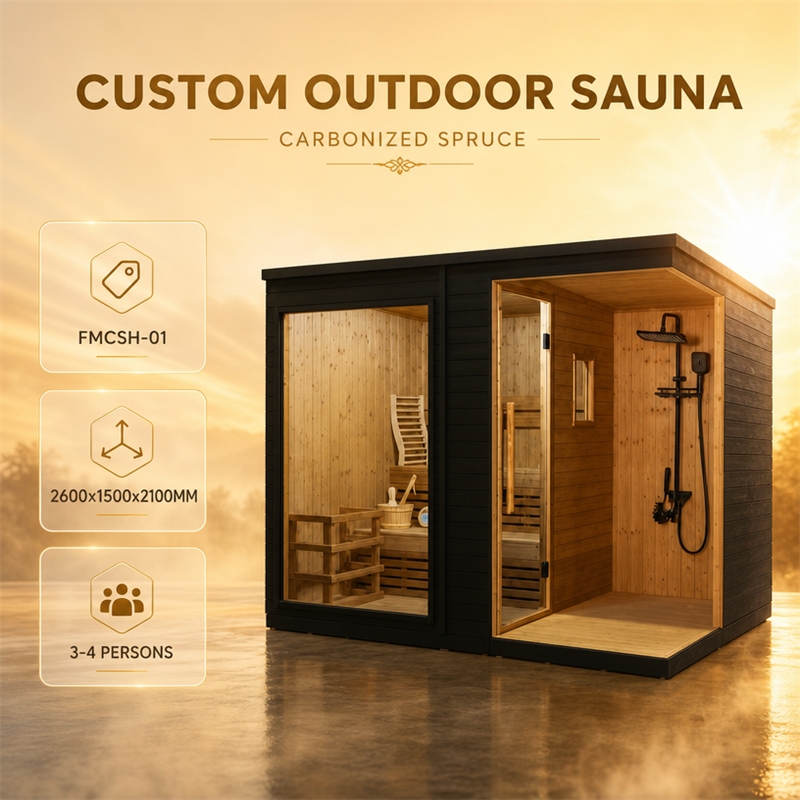
Resort business models support outdoor saunas combined with complementary wellness amenities like cold plunges and shower systems. Your comparison should evaluate multi-functional installations that create complete wellness experiences guests associate with luxury travel. Scenic placement and architectural integration enhance perceived value and justify premium resort pricing. Seasonal availability patterns may influence capacity requirements and heating system selection for outdoor installations.
FAQ
How do I determine the right sauna capacity for my business model?
Calculate your daily peak-hour user volume and average session length, then select a sauna that accommodates your comparison goals for member satisfaction without excessive idle time. High-volume facilities typically need multiple smaller units rather than one large installation, optimizing utilization rates and providing operational redundancy. Consult with sauna suppliers about your specific business model to validate capacity recommendations against industry benchmarks for your facility type.
What is the typical ROI timeline for sauna investments in different business contexts?
Premium wellness and spa facilities often achieve 3-5 year ROI through increased membership fees and premium pricing justification, while high-volume fitness models typically show longer payback periods but through higher daily utilization rates. Your comparison should model revenue assumptions specific to your target market's willingness to pay for sauna access. Outdoor resort saunas frequently deliver brand-differentiation value exceeding direct financial ROI, supporting overall resort premium positioning and repeat visitation within your business model.
Which sauna option requires the least training and ongoing management?
Electric and infrared saunas deliver the simplest operational profiles for business models without dedicated wellness staff, featuring automated heating controls and minimal daily maintenance. Your comparison should prioritize these options if your facility cannot dedicate trained personnel to sauna operations. Smart monitoring systems alert staff to maintenance needs automatically, reducing operational burden compared to traditional saunas requiring more hands-on knowledge and attention across your business operations.
 EN