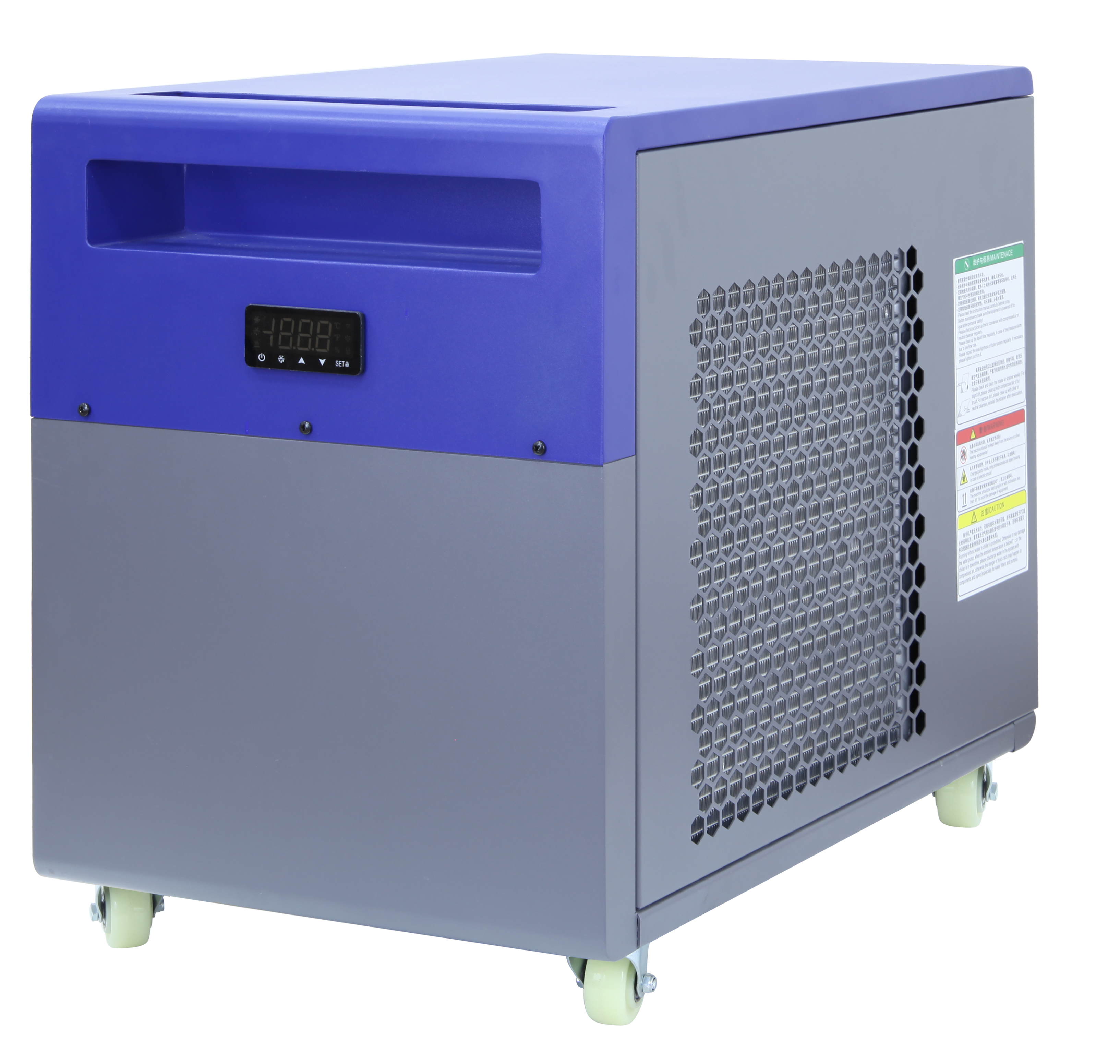
When evaluating a cold plunge investment, understanding the full financial picture extends far beyond the initial purchase price. Most facility managers and business owners focus on upfront acquisition costs while overlooking the ongoing expenses that accumulate over the equipment's lifespan. A comprehensive assessment of long-term operating cost is essential for making informed purchasing decisions and budgeting accurately for commercial use scenarios.

The total cost of ownership for cold plunge systems involves multiple financial components that vary significantly based on equipment specifications, usage patterns, and facility conditions. Energy consumption represents one of the largest variable expenses, while maintenance, repairs, and consumable supplies create predictable recurring charges. Understanding how these elements combine helps facility operators forecast realistic budgets and compare different equipment options based on genuine financial metrics rather than assumptions.
Energy Consumption and Electrical Operating Cost
Understanding Power Requirements for Cold Plunge Operation
Cold plunge equipment operates continuously or semi-continuously to maintain water temperature, making electricity consumption a primary driver of operating cost. The power draw depends on ambient temperature, desired water temperature, insulation quality, user frequency, and chiller system efficiency. A typical commercial cold plunge unit for commercial use consumes between 1.5 and 3 kilowatts during active cooling cycles, with seasonal variations affecting total consumption patterns significantly.
Calculating annual electrical expenses requires multiplying average daily operating hours by the equipment's kilowatt rating and your facility's electricity rate. In regions with moderate electricity costs around $0.12 per kilowatt-hour, a 2-kilowatt system running six hours daily accumulates approximately $525 in annual energy charges. High-efficiency equipment with advanced compressor technology can reduce this figure by 20 to 30 percent, creating meaningful long-term savings that justify premium equipment selection.
Seasonal Variations and Climate Impact on Total Cost
Geographic location profoundly influences the total cost equation for cold plunge systems. Facilities in warmer climates require proportionally more cooling energy to maintain target water temperatures, while cold-climate locations benefit from naturally lower ambient temperatures. A facility in Arizona may experience energy costs double those of a similar facility in Colorado, making climate analysis essential for accurate financial projections over the equipment's operating lifespan.
Seasonal demand patterns also affect operating cost calculations. Summer months typically drive higher energy consumption for commercial use applications, while winter operation may require substantially less cooling energy. Sophisticated facilities implement operational protocols that align cold plunge usage with seasonal efficiency peaks, reducing total cost through strategic scheduling and user communication programs.
Maintenance, Repairs, and Consumable Supply Costs
Routine Maintenance Requirements and Associated Expenses
Cold plunge equipment requires consistent maintenance to ensure reliable operation and extend equipment lifespan. Water treatment systems demand monthly chemical replenishment for sanitation and pH balance, costing between $150 and $300 annually depending on water volume and treatment complexity. Filter replacement, typically required every three to six months, adds $200 to $500 per year to operating cost calculations for commercial use facilities.
Compressor and pump inspection, refrigerant top-ups, and seal checks represent additional preventive maintenance items that must factor into total cost budgets. Professional service visits typically cost $300 to $600 per session, with manufacturers recommending quarterly or semi-annual inspections depending on usage intensity and equipment specifications. Preventive maintenance investments prove cost-effective compared to emergency repairs that can exceed $2,000 and interrupt facility operations.
Unexpected Repair Costs and Warranty Coverage Impact
Even well-maintained cold plunge systems occasionally experience unexpected failures requiring professional repair intervention. Compressor failures, refrigerant leaks, and electrical component malfunctions represent high-cost failure scenarios that can dramatically increase operating cost in a given year. Setting aside 10 to 15 percent of annual operating budget as a repair reserve fund provides financial protection against these unpredictable events affecting commercial use operations.
Extended warranty programs and service contracts can transform unpredictable repair expenses into fixed, budgetable costs. Many equipment providers offer multi-year protection plans covering parts and labor for $1,000 to $3,000 annually, creating predictable total cost structures that simplify financial forecasting. Evaluating warranty coverage terms, deductible amounts, and response time guarantees ensures that repair protection aligns with facility operational requirements.
Long-Term Financial Planning and Cost Comparison Strategies
Calculating True Cost of Ownership Over Equipment Lifespan
Comprehensive cost analysis requires projecting operating cost across the entire expected equipment lifespan, typically eight to twelve years for commercial-grade cold plunge systems. The calculation method involves summing purchase price, annual energy costs, maintenance expenses, and repair reserves across the ownership period, then dividing by total years to establish average annual cost. This approach reveals that premium equipment with superior efficiency and reliability often delivers lower total cost despite higher upfront pricing.
Real-world scenarios demonstrate the power of this analysis framework. A facility comparing two cold plunge units might see that Unit A costs $25,000 upfront but generates $8,000 annual operating cost, while Unit B costs $18,000 but requires $11,000 in annual expenses. Over ten years, the true total cost reveals Unit A at $105,000 versus Unit B at $128,000, making the premium equipment financially superior despite its higher initial price tag for commercial use investments.
Benchmarking and Industry Operating Cost Standards
Establishing realistic operating cost benchmarks requires understanding typical expense ranges for comparable facilities and equipment configurations. Industry data indicates that well-maintained cold plunge installations average between $4,000 and $7,000 in annual operating cost depending on size, location, and usage patterns. Facilities exceeding these ranges should investigate potential inefficiencies, maintenance gaps, or equipment specification mismatches affecting their financial performance.
Competitive benchmarking against peer facilities using similar equipment provides valuable context for identifying optimization opportunities. Online forums, industry associations, and equipment manufacturer networks facilitate peer comparisons that reveal whether your operating cost trajectory aligns with expectations. Facilities discovering significantly higher expenses than peer averages should conduct comprehensive equipment audits to identify energy waste, maintenance shortcomings, or user behavior patterns requiring adjustment to improve total cost performance for commercial use.
FAQ
What factors most significantly impact operating cost for cold plunge equipment?
Energy consumption, ambient climate conditions, and maintenance requirements represent the three largest operating cost drivers for cold plunge systems. Energy costs typically account for 40 to 60 percent of total annual operating expenses, making equipment efficiency ratings crucial selection criteria. Maintenance costs depend on usage frequency, water quality, and whether preventive service programs are implemented consistently.
How can facilities reduce their annual cold plunge operating cost?
Implementing energy-efficient equipment, establishing preventive maintenance schedules, optimizing user protocols, and monitoring operational metrics systematically reduces operating cost for commercial use. High-efficiency chillers and premium insulation decrease energy consumption substantially, while strategic scheduling aligns usage with naturally cooler periods. Regular filter changes, water treatment management, and compressor inspection prevent expensive repairs that spike total cost in unexpected ways.
Should a facility prioritize lower upfront price or lower long-term total cost when selecting cold plunge equipment?
Long-term total cost should dominate purchasing decisions for commercial use applications with multi-year operational horizons. While upfront price matters for cash flow, the 10-year operating cost difference between efficient and inefficient equipment can easily exceed the initial purchase price differential. Sophisticated facility managers calculate present value of ownership cost using industry-standard financial tools rather than focusing exclusively on acquisition expenses.
 EN