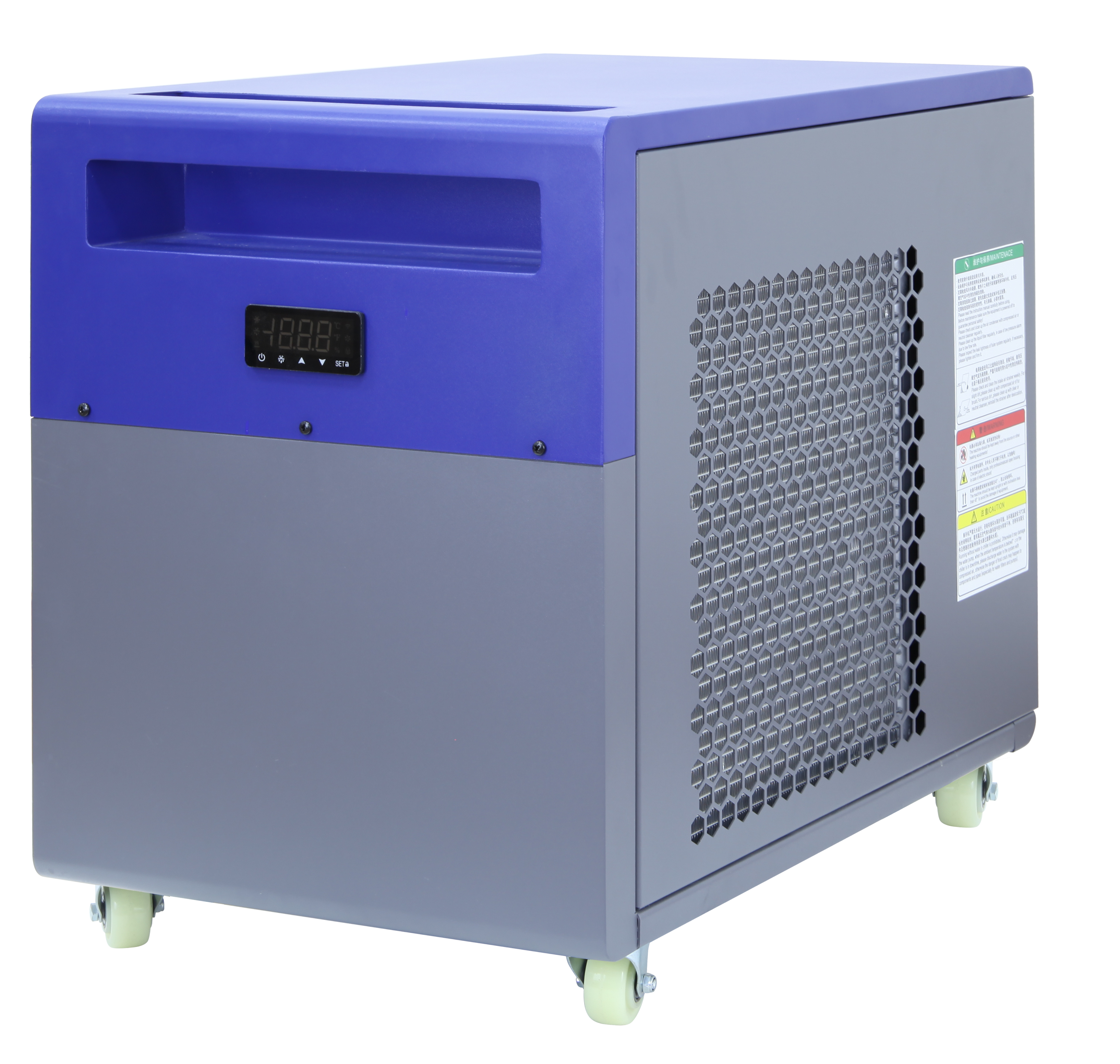
The journey of an OEM ice bath chiller from initial concept to market-ready production is a complex yet systematic process that requires careful planning, engineering precision, and seamless coordination across multiple phases. Whether you're a manufacturer looking to develop a proprietary cooling solution or an equipment supplier expanding into the wellness or medical sectors, understanding how an ice bath chiller moves through design, customization, and production stages is essential for success. This pathway involves translating customer requirements into technical specifications, validating designs through prototyping, and scaling manufacturing processes to meet demand while maintaining quality and consistency.

The development of an ice bath chiller as an OEM product follows a structured methodology designed to balance innovation, cost efficiency, and regulatory compliance. Each project begins with stakeholder alignment and requirement gathering, followed by detailed engineering design, prototype testing, tooling preparation, and ultimately high-volume production. Understanding each stage of this progression helps manufacturers and distributors anticipate challenges, allocate resources effectively, and deliver solutions that meet market expectations and technical performance standards.
Defining Requirements and Initial Design Phase
Translating Market Needs into Technical Specifications
The foundation of any successful OEM ice bath chiller project begins with comprehensive requirement definition. Manufacturers must work closely with intended end-users, distribution partners, or internal product teams to document functional specifications, performance targets, and operational constraints. This phase captures critical details such as cooling capacity, temperature control precision, water volume, energy consumption targets, and material compatibility. An ice bath chiller designed for luxury wellness applications may prioritize aesthetic design and quiet operation, while one intended for medical or research use requires emphasis on temperature stability and regulatory documentation. During this initial stage, customization options are identified, whether they involve refrigeration system selection, cabinet materials, control interface design, or integration capabilities with existing systems.
Engineering Design and Feasibility Assessment
Once requirements are clearly articulated, the engineering team develops detailed design concepts for the ice bath chiller. This involves thermal calculations to determine compressor and heat exchanger sizing, fluid dynamics modeling to optimize water circulation, electrical schematic design, and structural engineering for the cabinet or housing. CAD modeling allows visualization and early identification of potential manufacturing or assembly challenges. The design phase also evaluates component availability, supply chain reliability, and cost implications of different material and technology selections. For OEM projects, customization at this stage might involve selecting from established platform configurations or creating entirely new designs tailored to specific customer segments or performance requirements.
Prototype Development and Validation
Building and Testing Functional Prototypes
Before committing to full production tooling and manufacturing setup, OEM manufacturers build one or more functional prototypes of the ice bath chiller to validate design assumptions and performance targets. Prototypes typically use a combination of commercial off-the-shelf components and custom-fabricated parts to test the complete system under real operating conditions. Testing protocols assess cooling capacity, temperature accuracy, stability over extended operation, noise levels, power consumption, and the reliability of control systems. This phase often reveals design refinements needed to improve efficiency, reduce costs, or enhance user experience. For a customization-focused project, prototyping also demonstrates how the ice bath chiller adapts to different configurations or operational scenarios, ensuring the platform design is flexible enough to serve multiple customer segments without requiring redesign.
Performance Validation and Regulatory Compliance
Prototype testing extends beyond basic functionality to include compliance validation with relevant standards and regulations. Depending on the intended market and application, an ice bath chiller may require certification under electrical safety standards, refrigeration equipment directives, energy efficiency codes, or medical device regulations. Testing facilities measure thermal performance against published standards, verify electrical safety through insulation and grounding tests, and assess environmental impact through refrigerant selection and containment design. This validation phase may reveal the need for design modifications to meet regulatory requirements, increasing the importance of addressing compliance early rather than discovering issues during production. Customization flexibility is also validated to ensure that different configurations or material choices maintain compliance and performance integrity.
Manufacturing Scale-Up and Production Launch
Tooling, Supplier Qualification, and Process Development
Once design validation is complete, the OEM ice bath chiller project advances to production preparation. This stage involves commissioning manufacturing tooling for plastic or metal components, qualifying suppliers for critical parts such as compressors, heat exchangers, and control boards, and developing detailed assembly and testing procedures. Production engineers work to optimize manufacturing efficiency, reduce waste, and establish quality checkpoints throughout assembly. For customization projects, the production setup must accommodate variations in component selection or configuration without disrupting workflow or increasing complexity. Supplier agreements are formalized to ensure consistent component quality, reliable delivery, and the ability to scale production volume as market demand grows. The ice bath chiller manufacturing process is also designed to accommodate potential future modifications or expanded customization options without requiring complete retooling.
Quality Assurance and Continuous Improvement
Production launch requires robust quality assurance protocols to ensure every ice bath chiller meets design specifications and regulatory requirements. Each unit typically undergoes factory acceptance testing, including thermal performance verification, electrical safety checks, and operational stability assessment under controlled conditions. Quality data is collected and analyzed to identify trends, improve manufacturing processes, and refine customization guidelines. As production volume increases, manufacturers often implement continuous improvement programs to reduce defects, lower production costs, and enhance reliability based on field performance feedback. OEM projects benefit from establishing clear communication channels between the production facility, quality teams, and customers to address any issues promptly and maintain customer satisfaction. The customization framework is refined based on early production experience to simplify configuration options while preserving the ability to serve diverse customer requirements.
FAQ
What is the typical timeline for moving an OEM ice bath chiller from design to full production?
The timeline varies based on design complexity and customization requirements, but typically ranges from four to nine months. Simple projects using existing platform components may launch in four to six months, while entirely custom designs with significant customization options may require eight to nine months or longer. This includes design development, prototype testing, regulatory validation, tooling commissioning, and initial production setup.
How does customization affect the OEM ice bath chiller production process?
Customization is planned into the design phase through modular platform strategies that allow component substitution or configuration variation without requiring full redesign. During production, customization options are implemented through selective assembly workflows where different configurations are built from a common set of core components. This approach maintains manufacturing efficiency while delivering tailored solutions to different customer segments.
What are the key cost drivers when scaling an ice bath chiller to production volumes?
Primary cost drivers include component sourcing and supplier economies of scale, tooling and manufacturing equipment investment, labor efficiency improvements, waste reduction, and logistics optimization. Customization options can either increase or decrease costs depending on whether they are implemented through component substitution or require additional manufacturing steps. Early attention to design for manufacturability and supply chain optimization reduces overall production costs significantly.
 EN